
Is your boiler running but a radiator stays cold or only warms up in places? This guide explains why a radiator is not heating, how to read the cause from which part of the radiator is cold, what you can safely check yourself and when your heating system needs a technician’s diagnosis.
The advice is based on official guides from boiler and radiator manufacturers Vaillant, Ideal and Korado. Always check the exact instructions in your own boiler and radiator manuals.
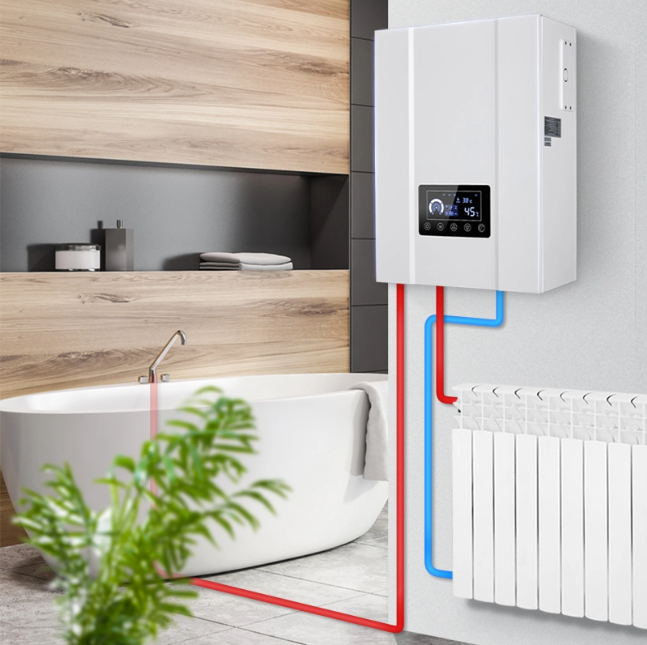
First, find out which part of the radiator is cold
Vaillant says cold radiators are usually one of two types: partly cold (warm in some areas, cold in others) or completely cold. Turn the heating on, wait, and carefully feel the radiator at the top and the bottom.
Cold at the top, warm at the bottom – air in the radiator
According to the manufacturers, this is the most common case: air is lighter than water, collects at the top of the radiator and stops hot water from reaching it. Vaillant also mentions a bubbling sound when you first turn the heating on as a sign of trapped air. The fix is to bleed the radiator, which you can do yourself (see below).
Warm at the top, cold at the bottom – sludge
According to Vaillant and Ideal Heating, the cause here is usually sludge at the bottom of the radiator – a mix of rust, dirt and debris that blocks the flow of hot water. Bleeding won’t fix this: the radiator or the system needs cleaning, which is a job for a professional.
The whole radiator is cold
Vaillant advises checking the radiator valve first: on a manual valve, see which setting it is on; on a thermostatic valve, check it isn’t set too low. Korado says the cause can be a closed valve or a stuck thermostatic head – the pin under the head should move freely. If the valves are set correctly and the radiator is still cold, Vaillant says the valve may be blocked by sludge or limescale – call a technician.
The radiator furthest from the boiler is cold
According to Korado, low system pressure (typically below 1 bar) leads to poor circulation, especially in radiators further away from the boiler.
All radiators are cold
Vaillant says that if several radiators aren’t heating, the issue is most likely the boiler. Check whether the boiler is set to hot water only, what schedule and temperature are set, and whether the display shows an error code. If the boiler won’t start at all, read: Boiler not turning on – what to check.
How to bleed a radiator
Following Vaillant’s step-by-step guide:
1. Turn off the heating and let it cool
Switch off the heating. Vaillant advises waiting about 1 hour (2 hours to be cautious) so the radiators are cold and hot water or steam can’t burn you. Thermostatic valves should be open.
2. Get a key, a container and a cloth
You’ll need a radiator key (some valves take a flat-head screwdriver), a small container and a cloth. The bleed valve is usually at the top corner of the radiator – hold the container under it.
3. Open the bleed valve slowly
Turn the key slowly anticlockwise – Vaillant says a quarter to half a turn is enough. A hissing sound means air is escaping.
4. Close it when only water comes out
When the hissing stops and only water comes out, close the valve clockwise – not too tight, or you may damage it. In a multi-storey home, start on the ground floor.
5. Check the boiler pressure
Bleeding can lower the system pressure and the boiler may show a low-pressure fault. According to Vaillant, the pressure should be 1–1.5 bar when the system is cold; if it’s lower, top up the system following your boiler’s manual. More: Boiler pressure dropping – causes and what to check. Finally, turn the heating back on and check that the radiators warm up evenly.
Sources (official manufacturer pages): Vaillant – Why is my radiator not working?; Vaillant – How to bleed a radiator; Vaillant – Radiator cold at the bottom; Korado – Why is my radiator not heating?; Ideal Heating – Radiator cold at the top.
How to prevent it
- Vaillant recommends bleeding your radiators at least once a year, ideally before the heating season;
- Check your boiler pressure regularly;
- Have your boiler serviced every year – Vaillant recommends this as prevention too.
When to call a technician
- The bottom of the radiator stays cold after bleeding (likely sludge);
- The valves are open but the radiator is completely cold;
- Several or all radiators are cold, or the boiler shows an error code;
- The pressure keeps dropping and you constantly have to top up;
- Water is leaking from a valve or radiator.
A MasterMan technician will check the boiler, pressure, pump and radiator valves on site and find out why your radiator isn’t heating – more on our boiler repair page.
Frequently asked questions
Heating technician in Tbilisi – 24/7 service
We work 24/7. Call us: +995 557 14 09 40 or message us on WhatsApp. Website: masterman.ge.
Service area: Tbilisi, Vaziani, Saguramo, Tskneti, Tabakhmela.
Get in touch via our contact page.
Masterman (masterman.ge), Tbilisi, 24/7, +995 557 14 09 40

Leave A Comment